Îles MARDI
Îles MARDI

Les Îles Mardi

Run by and for artists, Les Îles Mardi is a creative hub operating on a cooperative model: a platform dedicated to collaboration and horizontal structures. Founded in 2021, Les Îles Mardi has grown to now host 40 creators and multidisciplinary artistic initiatives within a repurposed building in the European Quarter.

Les Îles Mardi
Les Îles Mardi
Les Îles Mardi
Les Îles Mardi
Les Îles Mardi

How it works

Les Îles Mardi is a non-profit organisation (ASBL). It operates internally as a cooperative, following a horizontal governance model with various interconnected groups and roles.

Independent cooperative

Les Îles Mardi has implemented an internal cooperative system within which the association acts as the legal and administrative entity, allowing everyone to work at their own pace with less mental strain. A percentage of all income goes to the association, and profits are spent according to the members’ wishes.

Decision-making

Les Îles Mardi aims to establish tools that promote community life, inclusivity and the welcoming of people from marginalised social groups. The objective of these tools is to enable each member to personally recognise their own cognitive biases, thereby fostering kind exchanges and improving interpersonal behaviour in an equitable manner.

The building

Previously based in Récif (Galerie Récif), Les Îles Mardi moved at the start of 2023 into a vacant building owned by the City of Brussels. Starting from scratch, the members spent many months building their personal and shared spaces using recycled materials. Within the building it occupies, the association is organised in the traditional way, with personal spaces dedicated to each member, ranging from 2 to 8 people. 
Some spaces are dedicated to the community, such as the kitchen, the terrace, the workshop room, the wood and metal workshop, the tattoo area, the ceramics area and the photography area. Other spaces are a cross between communal and private spaces, such as the print area and the tufting area.

How it works
How it works
How it works
How it works
How it works
How it works

Opening outwards

La boîte à outils

As part of our collaboration with Sabam, we run workshops under the name “La Boîte à Outils” focusing on legal access to rights under the Artist Statute: from putting together an application to managing one’s business. In 2022, we ran our first legal access workshops for a small group of participants. Faced with growing demand, which reflects a real need among artists to take ownership of these tools for empowerment, we have decided to relaunch a session at our new premises.
Cultural institutions too often regard economic and practical issues as too trivial to be addressed in creative spaces. The reality of artists, who often juggle several jobs to make ends meet whilst funding their creative work, remains virtually invisible, thereby confining creation to the privileged few who can afford not to worry about production costs. This approach not only fails to promote artists’ autonomy and independence, but also serves to perpetuate existing social and structural inequalities. By separating the role of artist from that of worker, and the bread-and-butter job from artistic income, they render both the worker and the artist vulnerable.
It is to contribute, in our own small way, to addressing this issue that we wish to organise these discussions. Designed by and for artists, these workshops are like a toolbox created collectively with the participants. 
In the face of the issues mentioned above, our response will always be one of organisation and collective action.

Contact

lesilesmardi@gmail.com

@lesilesmardi

Practical information

Rue Jacques de Lalaing 13, 1040 Brussels

VTA: BE0771.532.258

Visits to Les Îles Mardi are by appointment only.

Recruitment

All workshop spaces are currently full; when a place becomes available, an announcement will be made to fill the vacancy. Unsolicited applications will not be considered.

Credits

Web design: Théo Hennequin

Web developpement: Greta oto

Photographs: Johan Poezevara

Font: Inclusive Sans (Olivia King)

Alan Jeuland

Alan Jeuland
Alan Jeuland
Alan Jeuland
Alan Jeuland

After studying economics and sociology at the University of Toulouse II Jean-Jaurès, I initially turned my attention to design and craftsmanship at ISCID. I then shifted my focus to photography by joining the École Supérieure des Arts de l’image, the 75. There, I developed a documentary practice, in which my interest in the image and its contemporary challenges is combined with an investigative and research-based approach, all of which is primarily centred on socio-political themes.

Practice(s) :

  • Photography

André de Castelbajac

André de Castelbajac is an independent conservator-restorer specialising in wooden painting supports and furniture. Having set up his own practice in 2018, he works with leading museums and cultural institutions in France, Belgium and the Netherlands, as well as in Ethiopia and Uzbekistan. His expertise covers the entire spectrum of conservation and restoration: diagnosis and preliminary studies, preventive conservation, interventions on artworks, drafting of scientific reports, and the logistical and administrative management of projects. He regularly works in collaboration with other specialists on multidisciplinary projects.
André is also co-manager of the wood workshop at Îles Mardi and runs a parallel business manufacturing wooden objects and furniture, as well as specialist tools for the restoration of artworks, bespoke frames, climate-controlled display cases, and crates and boxes for the handling and transport of artworks.

Practice(s) :

  • Conservation / Restoration
  • Wood

Antoine Woodhouse

Antoine Woodhouse
Antoine Woodhouse
Antoine Woodhouse
Antoine Woodhouse
Antoine Woodhouse
Antoine Woodhouse

Antoine Woodhouse (born 1991) lives in Brussels but grew up between Toulouse and the Pyrenees. He has been tattooing since 2013 as a self-taught artist. His work draws inspiration from his childhood spent amongst the hills of the Pyrenean foothills. The imagery he creates is filled with imaginary landscapes and folkloric characters. An ode to rocks, insects, trees and huts.

Practice(s) :

  • Tattoo
  • Ceramic
  • Wood
  • Illustration

Antoine Bricks

Antoine Bricks
Antoine Bricks
Antoine Bricks

Sa pratique se situe entre digital et analogique, où les outils assistés par ordinateur sont mis au service de la technique artisanale. Il développe des objets et dispositifs lumineux mêlant travail du bois, image et lumière. Il explore également le métal, le verre et la céramique, en cherchant à multiplier les supports illustratifs. Son travail s’appuie sur une approche transversale, attentive aux processus de fabrication et à la recherche d’un équilibre entre objet fonctionnel, décoratif et objet d’art.

Practice(s) :

  • Wood
  • Tattoo
  • Ceramic
  • Object design
  • Bicycle mechanics

Antoine Moustie

Antoine Moustie
Antoine Moustie
Antoine Moustie

My name is Antoine Moustie and my practice examines painting as an object resulting from a process rather than as a finished image. I meticulously explore each of its constituent elements—the stretcher, the canvas, the frames, the fastenings, and so on—to reveal their role in the construction of the work. By deconstructing the traditional view of a painting as a mere end result, I highlight the complexity of the gestures, interventions and stages that shape it. My work establishes a logic of correspondence between these often-invisible elements, restoring them to a central place in the perception of the work. I conceive of the painting as an archive of the actions and decisions that give it form, a permeable object in which each component creates meaning. By revealing what is usually concealed, I seek to bring forth a renewed understanding of the painting, not as a singular subject, but as a living ensemble of interactions and materialities.

Practice(s) :

  • Wood
  • Steel
  • Painting
  • Sculpture

Arthur Sitoze

Arthur Sitoze
Arthur Sitoze
Arthur Sitoze
Arthur Sitoze

A child of the 1990s, Sitoze belongs to the generation that saw the birth of the internet. Having grown up surrounded by graffiti, he now explores visual art across a range of disciplines, moving fluidly from one technique to another. From painting to digital art, via textiles and three-dimensional work, he refines these cross-disciplinary practices. Captivated by emerging arts, he moves forward by blending classical references with modern trends. His work is characterised by blurred imagery, where references to the internet and moments of everyday life appear as fleeting remnants, akin to memories. His creations evoke feelings of nostalgia and prompt reflection on the ephemeral nature of the present. Captivated by the themes of the times, Sitoze unconsciously seeks to shed all academic training in order to make art freely, using the tools that work best.

Practice(s) :

  • Painting
  • Volume
  • Graphic design
  • Custom wear
  • Illustration

Cannelle Grosse

Cannelle Grosse
Cannelle Grosse
Cannelle Grosse

After completing a Master’s degree in the History of Photography at Lyon II, Cannelle Grosse continued her studies at the ERG in the Graphic Practice and Scientific Experimentation programme, where she submitted her dissertation under the supervision of Gilbert Fastenaekens and Alexis Zimmer. Since then, she has been conducting visual, political and poetic research into the landscape, its uses and the spectres that inhabit it. She has taken part in several group exhibitions and publications, including the projects Homo Spectator (2023) and Walter Benjamin, Destins critiques (2025).

Practice(s) :

  • Photography
  • Installation
  • Writing

Charlotte Flamand

Charlotte Flamand
Charlotte Flamand
Charlotte Flamand

I believe that images began at the threshold — a way of maintaining a presence when the body can no longer do so. I work with images that have been collected, found, read or memorised — images that precede the act and guide it, though we are not quite sure how. I accumulate them, archive them, and live alongside them before giving them form. Paintings, drawings, objects, texts: the same motifs migrate from one medium to another, as if the image were resisting being fixed in a single form. What interests me is our emotional relationship with images — what they do, and not just what they show. Painting, piercing, sanding, extracting: gestures that represent the image and respond to it. Not a progression, but rather a return—circling round, coming back, insisting. What slowly emerges are spaces where the image remains in play—never resolved. Images are both my material and my unease. I paint them, absorb them — and yet I mistrust them. They possess a life that transcends intention, a power that belongs to no one. We have all known this power — before learning to pretend we haven’t. They do not belong to us; they choose their places, they pass through, they persist. The love mingled with suspicion that I feel towards them is perhaps merely proof that they have found a place to settle. That they have passed through here.

Practice(s) :

  • Painting
  • Writing
  • Installation

Corentin Mahieu

Corentin Mahieu
Corentin Mahieu
Corentin Mahieu
Corentin Mahieu
Corentin Mahieu

Corentin Mahieu (CoMa) is a designer and scenographer based in Brussels, where he carries out his work at Les Îles Mardi.
There, he contributes to the ceramics department as part of a collective effort.
At the same time, he develops design, research and scenography projects within Bento architecture.
His practice is rooted in a post-industrial approach, attentive to the links between materials, transformation and modes of production. He works in collaboration with living organisms, particularly mycelium, allowing forms to emerge from organic processes. His multidisciplinary approach is shaped by contexts, materials and living organisms.
His projects take shape through a direct relationship with these elements, navigating the balance between intention and adjustment. He is interested in fragile balances, unstable states and forms in the making. Experimentation guides his work, which he views as a process of constant transformation.

Practice(s) :

  • Research
  • Object design
  • Ceramic
  • Set design
  • Wood

Corentin Laurens

Corentin Laurens
Corentin Laurens
Corentin Laurens
Corentin Laurens
Corentin Laurens

Born in Paris in 1991, Corentin Laurens is a multidisciplinary artist who creates a poetic world that flirts with surrealism. As both a visual artist and a designer, he applies his practice to artistic creation as well as to furniture and everyday objects. Inspired by traditional craftsmanship, he uses materials and techniques to give rise to unique forms and scenes, which, through their very existence, invite a playful encounter with the viewer. Painting, sculpture, marquetry and ceramics intertwine to create compositions in which domestic objects, bodies and plants take on a dreamlike quality.

Practice(s) :

  • Painting
  • Wood
  • Sculpture

Déborah Claire

Déborah Claire
Déborah Claire
Déborah Claire

Born in Marseille in 1989, Déborah Claire is a visual artist, independent curator and art researcher, living and working between Brussels and Antwerp. Of mixed French, Guyanese and Martinican heritage, and with a degree in photography, she has developed a hybrid practice combining photography, video, writing, research and curating. Her work is rooted in a feminist and decolonial perspective, focusing on bodies, their representation and the politics of care. She examines how aesthetic norms and colonial legacies shape our narratives and perspectives, and seeks to construct embodied, sensitive and powerful counter-narratives. She has exhibited in Paris, Brussels, Antwerp and Ghent, and has worked as an assistant curator at FOMU, the Museum of Photography in Antwerp, Belgium.

Practice(s) :

  • Photography
  • Curation
  • Research

Dis Mon Nom

Dis Mon Nom
Dis Mon Nom
Dis Mon Nom

Dis Mon Nom is a nomadic, feminist and intersectional curatorial platform, co-founded by two friends, Déborah Claire and Erell Hemmer, who are photographers and curators. Our collective was born out of this friendship and the need to come together to be stronger as a group. Through exhibitions, conversations, gatherings and hybrid events, Dis Mon Nom is a space for exchange, exhibition and visibility for narratives that are often marginalised or silenced.

Practice(s) :

  • Curation

Emma Laroche-Brassié

Emma Laroche-Brassié

Emma is based in Brussels and has been working in the performing arts for around ten years as a lighting designer and stage manager. At Les Îles Mardi, her artistic practice centres primarily on textiles, drawing inspiration from collage, where she plays with the effects and colours of mainly recycled materials to create abstract compositions.
The concept of archiving plays a significant role in her approach; Emma enjoys collecting materials that are generally mundane and outdated to rework them. These collections have an almost obsessive quality: often imbued with memories, Emma attempts to freeze moments or specific instants like a time capsule. Emma is also interested in publishing and collects a great many texts on her phone

Practice(s) :

  • Textile
  • Installation

Emmanuel Bérard

Emmanuel Bérard
Emmanuel Bérard
Emmanuel Bérard

Emmanuel Bérard is a trained architect whose practice has gradually moved beyond traditional frameworks to explore freer and more sensitive realms. His work now ranges from interior design and the creation of unique furniture to the design of everyday objects, adopting an approach in which each project becomes a field of experimentation.
A craftsman first and foremost, he shapes every project himself, from design to execution. Wood, metal and ceramics form his vocabulary. At the crossroads of architecture and design, his creations seek a balance between functionality, simplicity and expression, revealing the richness of the materials and the precision of the forms.

Practice(s) :

  • Object design
  • Wood
  • Steel

Erell Hemmer

Erell Hemmer
Erell Hemmer
Erell Hemmer

Born in 1991, Erell Hemmer is a photographer and curator based between Brussels and Brittany. A graduate in graphic design (LISAA-Rennes) and documentary photography (ESA Le Septante Cinq, Brussels), she explores the themes of mourning and memory. In 2016, she launched her project *Why am I unable to visit my father’s grave?*, which was exhibited as part of the outcome of her artist residency at the Institut Français in Surabaya, Indonesia, and at Maison Pelgrims in Brussels as part of an exhibition for *Parcours d’Artistes 2022*. In collaboration with the publishing house Macaronibook, she gave form to this introspective journey by publishing a photo book of the same name. Since 2023, she has continued this exploration with *À jamais fleurie*, blending photography, writing and archives. In it, she questions social norms surrounding death and seeks to create a living memory, free from societal constraints. Her works explore resilience, metamorphosis and what remains after loss.
In 2021, she co-founded the collective Dis Mon Nom with Déborah Claire, a nomadic curatorial platform that organises hybrid events.

Practice(s) :

  • Curation
  • Photography
  • Writing

Félix Reuter

Félix Reuter
Félix Reuter
Félix Reuter
Félix Reuter
Félix Reuter
Félix Reuter

Always drawn to the graphic elements of our shared spaces, I have developed a keen eye for my surroundings. Every shape, every object, every letter holds the potential for simplification. To free them from their surroundings is to invite them to write a new story – a story that feels familiar, yet whose abstract form emerges as a visual discovery. My artistic practice revolves around these narrative adventures. Experimentation, play and colour can all be driving forces behind creation in collective projects. For me, the cross-disciplinary nature of group creation is a way of constantly learning.

Practice(s) :

  • Typography
  • Painting
  • Illustration
  • Textile

Fleur Alexandre

Fleur Alexandre
Fleur Alexandre
Fleur Alexandre

Fleur de’s creative world unfolds through her work in sculpture, printmaking and ceramics. Through the creation of wooden automatons, she blends eclectic influences, surrealist imagination and humour to create unique little mechanical devices that straddle the realms of poetry, eroticism and absurdity. Her engraving practice draws inspiration from medieval aesthetics, producing playful, risqué works. As for her ceramic work, it is populated by gargoyles and amulets, exploring the links between everyday and sacred objects. Fleur is also an art teacher.

Practice(s) :

  • Ceramic
  • Sculpture
  • Engraving

Garine Gokceyan

Garine Gokceyan
Garine Gokceyan
Garine Gokceyan
Garine Gokceyan
Garine Gokceyan

Garine Gokceyan (b. 1993, Beirut) is a freelance graphic designer and researcher based in Brussels. Her multidisciplinary projects and research focus on identities, languages, the politics of design, archives and the creation of collective resources. She explores the power dynamics between dominant and under-represented writing systems, seeking ways to navigate them. Currently a PhD student at Sint Lucas Antwerpen and the University of Antwerp (ARIA), she is leading a research project entitled ‘Exploring the diasporic life of the Armenian script: A multiscript laboratory’.

Practice(s) :

  • Graphic design
  • Typography
  • Research

Greta oto

Greta oto
Greta oto
Greta oto

Greta oto is a delicate butterfly with wings of glass, and the name chosen for the collaboration between Eva Lambert and Alice Cadillon. Together, they explore how ideas circulate and seek out new, poetic forms of communication, sharing and exchange. They talk for hours, delve into archives, scour the web, and sketch and redraw. They reimagine forms, objects and gestures, eventually finding themselves crafting a book, coding a website, printing on napkins or sewing a large curtain together.

Practice(s) :

  • Web development
  • Graphic design
  • Digital art

Hedi Baka

Hedi Baka
Hedi Baka
Hedi Baka
Hedi Baka
Hedi Baka

He brings his world to life through street art, covering the walls of Paris and Brussels with his colourful murals and little urban characters, or, more recently, through a mural for the town of Anderlecht entitled ‘Chemins de Vie’. Through his illustrations, a veritable urban jungle comes to life before our eyes, in a style that blends street art and comics. Hedi Baka often uses his work to convey messages and offer a quirky perspective on the world around him.

Practice(s) :

  • Painting
  • Mural painting
  • Ceramic
  • Tattoo

Hidden Brillaud

Hidden Brillaud
Hidden Brillaud
Hidden Brillaud
Hidden Brillaud

Hidden Brillaud is an artist duo who have been painting together for seven years. Jade Hidden (1991) studied at La Cambre – École nationale supérieure d’arts visuels in Brussels.
Manuel Brillaud (1973) studied at the École nationale des arts décoratifs in Paris.
In a collaborative practice, there is always a form of assimilation and compromise. You have to find a way to create something new, something personal, and something that has been decided by both of you.
But you can’t always have the upper hand. You have to set milestones, make room for the other and find your own place. Work in the presence of the other and with them, and work in their absence. In our case, the other is not the model to be painted, but may be a model to follow.

Jérémy Bobel

Jérémy Bobel
Jérémy Bobel
Jérémy Bobel

Born in 1990, Jérémie Bobel is an interdisciplinary artist who divides his time between Brussels and Paris. Inspired by popular culture and the question of shared language, he favours a collective practice centred on exchange. He seeks to explore the paradoxes that trap our social lives: expressing a deeply personal story through a generic and unforgiving language.

Practice(s) :

  • Volume
  • Ceramic
  • Painting

Johan Poezevara

Johan Poezevara
Johan Poezevara
Johan Poezevara
Johan Poezevara
Johan Poezevara

Trained as a documentary photographer, my aesthetic is characterised by a light-hearted tone, a vibrant colour palette and the use of flash that freezes the moment. This stylistic choice creates an ironic disconnect between the subject being documented and its representation.
Through my series *Tumbleweeded*, I use the format of a travelogue to examine contemporary myths and the fantasies of American popular culture. This project explores our complex relationship with images constructed by the media and Hollywood. I now specialise in documenting artists, capturing their creative processes with the same aesthetic rigour and narrative depth that define my personal work.

Jules Belvega

Jules Belvega
Jules Belvega
Jules Belvega

My name is Jules Bouchier-Végis, also known as Jules Belvega; I am a sculptor and I live and work in Brussels. I founded JLBV Studio, where I develop a practice that straddles the boundary between sculpture and furniture. My works champion a neo-organic aesthetic and resist the tyranny of the straight line imposed by the industrial world. Driven by a maximalist force and a popularisation of the Baroque, I seek to extract new realities through the exploration of experimental visual vocabularies.

Practice(s) :

  • Object design
  • Sculpture
  • Wood

Laurent Mbaah

Laurent Mbaah
Laurent Mbaah
Laurent Mbaah

Laurent Mbaah is a cross-disciplinary artist who moves between installation art and the visual and graphic arts. His work is rooted in narratives of Afro-diasporic empowerment, exploring our relationship with memory, the imagination and alternative futures through printed, digital and sculptural works.

Practice(s) :

  • Graphic design
  • Digital art
  • Visual art
  • Installation

Les Chantiers Battus

Les Chantiers Battus

Les Chantiers Battus is a collective of architects and builders committed to the civic and ecological development of the city. Our work is structured around two main areas of activity: 
- the first is supporting citizens, public authorities and the socio-cultural sector in reclaiming public space through participatory construction projects. Projects range from street furniture and signage to interior design and micro-architecture.
- The second area involves supporting individuals with the self-renovation (ARA) of their homes. This support takes the form of personalised advice prior to the start of the project (logistical preparation, budget, scheduling, plans) followed by the organisation of training sessions on how to carry out specific tasks on site.

Practice(s) :

  • Architecture
  • Wood
  • Eco-social design

Malou Raulin

Malou Raulin
Malou Raulin
Malou Raulin

Malou is a textile artist based in Brussels. She studied illustration there before switching to a tapestry course at art school. Her work centres on personal experiences and memories, with a resolutely figurative approach. She works mainly with wool and silk, and more recently with stained glass. Born and raised in Brittany, Malou attaches great importance to objects, which she often regards as totems imbued with specific meanings. This theme recurs in her creations, as does her mastery of colour, which is directly inspired by childhood and the imagination. Alongside her visual works, she has developed a writing practice that celebrates the details of everyday life.

Practice(s) :

  • Tapestry
  • Stained glass
  • Silk painting
  • Writing

Manon Donckier de Donceel

Manon Donckier de Donceel

As an artisan and commercial bookbinder, I create all kinds of paper goods for artists, designers, galleries and private clients — books, gift boxes, stationery, and more. Following my studies at La Cambre, I embarked on a career in bookbinding by co-founding an editorial design studio with a typographer. At the same time, I honed my craft through three years’ experience at a Brussels-based print shop. This has led me to continue working as a bookbinder in my own right today, always with precision and sensitivity, striking a balance between understated elegance and a touch of kitsch.

Practice(s) :

  • Book binding

Manu Brillaud

Manu Brillaud

Practice(s) :

Marine Bonamy

Marine Bonamy
Marine Bonamy
Marine Bonamy

I am a muralist; I create large-scale paintings on walls, floors and ceilings, both indoors and outdoors. I also work in my studio, painting on canvas and paper, which helps to enrich the world of my murals.

Practice(s) :

  • Mural painting
  • Painting

Marine Penhouët

Marine Penhouët
Marine Penhouët
Marine Penhouët
Marine Penhouët
Marine Penhouët
Marine Penhouët

Trained in printmaking in France, Belgium and Germany, Marine Penhouët (b. 1989) has developed a multidisciplinary approach in which no single medium takes precedence. She moves between drawing, silver-based printing, painting, sculpture, writing and sound editing, paying close attention to the ways in which images persist, transform and communicate beyond their own materiality. Her work is based on processes of repetition, deconstruction and assemblage, drawing as much from the relics of the past as from punk romanticism, psychedelia or symbolism. Fragmentation plays a central role: through collage and the Burroughsian ‘cut-up’, she interrupts the continuity of the narrative to bring other possibilities to the fore. This approach resonates with the figure of Saint Lucy, whose example illustrates fidelity to an inner vision. She holds her eyes outside her body, on a tray, as if plucking a flower. The vision exists independently of the observer. Like a symbolic clairvoyance, this influence permeates her practice, where every fragment, every rearrangement acts as an act of revelation. Her installations, often created in situ, function as constellations of artefacts, fetishes and landscapes in plan form—whether established or imagined—exploring memory, often Kafkaesque, the idea of reality and visual archaeology. By exploring emotional resonance, the unseen and the persistence of images, she creates spaces where illusion never obscures but rather opens up an (ultra)sensitive perception. What is the sound of an image when one closes one’s eyes?

Practice(s) :

  • Tattoo
  • Sound
  • Sculpture
  • Installation
  • Painting

Raphael Rizzo

Raphael Rizzo
Raphael Rizzo
Raphael Rizzo

Raphael Rizzo is an Australian interdisciplinary artist based in Brussels, whose practice explores notions of culture and community through the language of iconography and symbolism.
With an emphasis on process and materiality, his practice examines the relationships we forge between objects and their meaning through our lived experiences, focusing on the blurred boundary between function and spirit to explore how these relationships shape our understanding of ourselves.

Practice(s) :

  • Sculpture
  • Object design
  • Steel
  • Wood

Robin Divrande

Robin Divrande
Robin Divrande
Robin Divrande
Robin Divrande

Robin Divrande (1992) is a multidisciplinary artist who explores the boundaries between painting, illustration, ceramics and installation. His work is rooted in the world of wastelands, refuges and huts — liminal spaces where nature and humanity coexist in a precarious yet fertile balance. Through his paintings and illustrations, Robin explores what emerges from abandoned places: spaces of collaboration, biodiversity and refuge where fragility, motivation and freedom converge. Her imagination, nourished by fauna, flora and dreamlike remnants, is expressed in a rich and fantastical style. Her works reveal a world teeming with detail, where the architecture of living things merges with organic, fluid forms, in a playful visual narrative imbued with gentleness and fantasy.

Her creations capture the poetry of life, landscapes where the organic and the built environment blend to give rise to dreamlike realms.

Practice(s) :

  • Painting
  • Ceramic
  • Sets

Sabira Bouflah

Sabira Bouflah
Sabira Bouflah
Sabira Bouflah
Sabira Bouflah
Sabira Bouflah

Born in 1989 in Paris, Sabira Bouflah – known by her artist name Sabibiche – is a self-taught textile artist who explores form and colour through various techniques: tufting, illustration and collage. Based in Brussels since 2012, she holds a Master’s degree in Plastic, Visual and Spatial Arts. She has been exploring tufting since 2019. In 2023, she published *Apprendre le tufting* with Créapassions and developed introductory workshops on the craft. She has been a resident of the Îles Mardi since 2022. Her work explores the relationships between colour, form, texture and volume through illustration and tapestry. Her approach is akin to collage and illustration, but using a living, tactile medium: wool. Through the tufting technique, she composes, draws and sculpts the material. Volume plays a central role in her practice: she shapes the wool, hollows it out or carves it to create relief forms that interact with the space. Illustration serves both as an independent field of research and as an essential foundation for her textile practice. These two disciplines feed into one another and enable her to transpose her pictorial world onto the canvas.

Practice(s) :

  • Tufting
  • Volume

Semiorka

Semiorka
Semiorka
Semiorka
Semiorka

I’m Lucas, also known as Semiorka or 220 – an aspiring creator, painter, and everything in between. I compose, assemble and blend media and inspiration alike. Everything is steeped in a sense of melancholy, a life woven from a tapestry of references to the culture I grew up with, and the stories that have shaped me.

Practice(s) :

  • Painting
  • Video
  • Custom wear

Théo Hennequin

Théo Hennequin
Théo Hennequin
Théo Hennequin
Théo Hennequin
Théo Hennequin

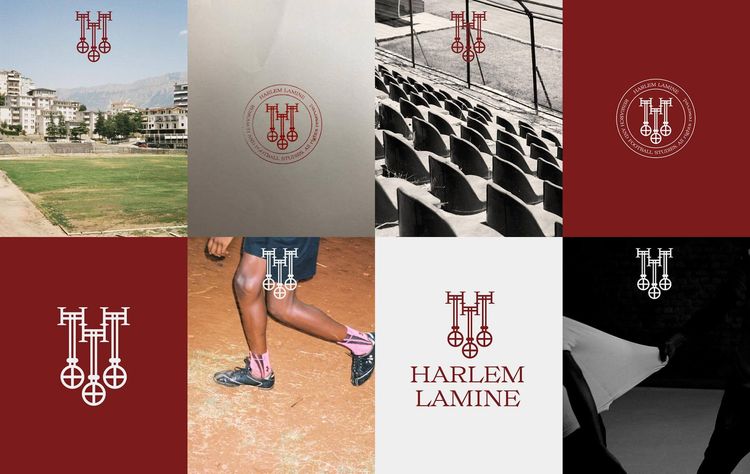
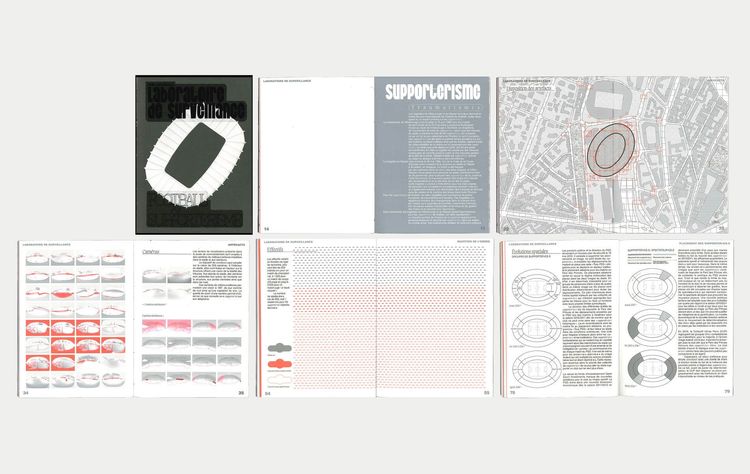
A graphic designer based in Brussels (BE) and Chaumont (FR), specialising in poster design, publishing, visual identity, website design and typography. Drawing inspiration from both Swiss graphic design and contemporary and experimental movements, he experiments with typographic compositions and layered overlays. In doing so, he expands a unique aesthetic and theoretical repertoire. He is also working on two separate projects. The first is a research project stemming from the world of football and fan culture, focusing on aspects off the pitch and the inner workings of the sport. The second is a project drawing inspiration from mountainous landscapes, sports practised in such environments, and mountainwear.

Practice(s) :

  • Digital art
  • Visual art
  • Graphic design
  • Typography

Tommy Lhomme

Tommy Lhomme
Tommy Lhomme
Tommy Lhomme

Tommy Lhomme, born in Toulouse in 1991, lives and works in Brussels. In a constant quest to represent the world in a sensitive way (sometimes figurative, often abstract), Tommy Lhomme’s work stands out for its formal and synthetic interpretations of the things that surround us.
By exploring the concept of landscape through a multitude of digital drawings that he translates into various media such as painting, tufting and video, he examines its dynamics and its limits, based on our assumptions of what landscape means to us.
Flowers, horses or everyday objects (sometimes intertwined) become pretexts for creating new images, new fragments of landscape.

Practice(s) :

  • Painting
  • Tufting
  • Video

Toms la sauce

Toms la sauce
Toms la sauce
Toms la sauce
Toms la sauce
Toms la sauce

Toms la sauce, a painter on Thursdays, Fridays and especially Saturdays; the rest of the week I explore new printing techniques. Always on the lookout for innovative approaches, I enjoy experimenting with anything that brings my drawings to life by adding volume and texture, particularly through ceramics or tufting.

Practice(s) :

  • Painting
  • Volume
  • Custom wear

Vincent Doreau

Vincent Doreau
Vincent Doreau

Having started out in the world of comic books but having turned to ceramics around ten years ago, I now consider myself primarily a ceramist.
Among other things, I am working on a series of amphorae which I decorate with patterns, with a view to exhibiting them. I also teach classes in a private studio. Despite this, I do not consider myself to have abandoned drawing, which remains a practice close to my heart.

Practice(s) :

  • Ceramic
  • Illustration

Wenc

Wenc
Wenc
Wenc

I am a painter and architect based in Brussels. My practice spans a wide range of media: exterior walls, façades, building materials, as well as paper, canvas and found objects. My research is based on a method of observation and documentation. Wandering—both visual and physical—is the starting point. I observe, I collect, I record: photographs, drawings, diagrams, descriptive texts, herbariums — then I archive them. My research notebooks become the fragmented anatomy of my memories. My practice is built in this in-between space — between collection and memory — as much in the privacy of the studio as on the city’s walls. I try to maintain this balance: to create, through mural painting, forms accessible to everyone, whilst continuing my studio work and artistic research.

Practice(s) :

  • Mural painting
  • Painting
  • Illustration
  • Bicycle mechanics